


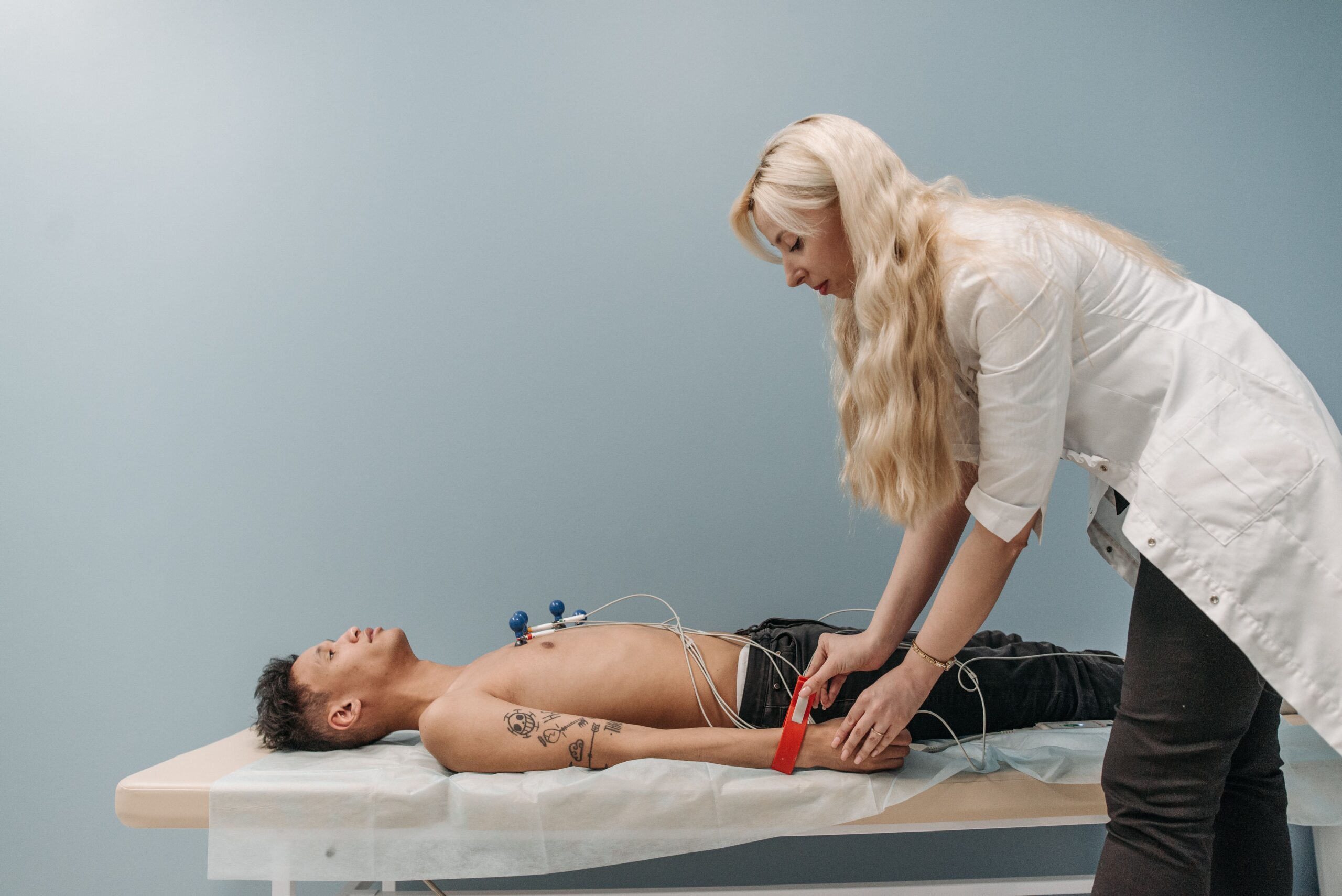
If your doctor has recommended a nuclear stress test, the name alone can sound intimidating — “nuclear” and “heart” aren’t words most people want to see in the same sentence. In reality, nuclear cardiology stress testing is one of the most well-established, extensively studied tools in cardiovascular medicine, and it’s been quietly guiding heart disease diagnosis and treatment decisions for decades. Here’s what the test actually involves, why doctors order it, and what’s changing in the field right now.
This article is for general educational purposes and isn’t a substitute for guidance from your own cardiologist or care team.
What the Test Is Actually Measuring
At its core, a nuclear stress test — more formally called radionuclide myocardial perfusion imaging — is designed to answer one specific question: is blood flowing normally through the heart muscle, both at rest and when the heart is working hard? A small amount of a radioactive tracer is injected into the bloodstream, and a specialized camera detects the tracer as it moves through the heart. Areas of the heart muscle receiving good blood flow light up clearly on the resulting images; areas with reduced blood flow, often due to narrowed or blocked coronary arteries, show up dimmer or missing entirely.
Two main camera technologies are used for this: SPECT (single-photon emission computed tomography) and PET (positron emission tomography). SPECT has been the dominant technology for decades, largely because it’s widely available and works with a well-established set of radiotracers. PET uses a different class of radioactive tracers that emit particles called positrons, which annihilate almost instantly upon contact with the body’s electrons and produce a very specific, easily detected signal. That physics gives PET some real practical advantages — sharper image resolution, faster scan times, and lower radiation exposure per scan compared to older SPECT protocols.
Why “Stress” Is Part of the Name
The heart can often look completely normal at rest even when a coronary artery is significantly narrowed, because the artery may still deliver enough blood flow when demand is low. The whole point of the “stress” portion of the test is to push the heart to work harder, the same way a mechanic might rev an engine to expose a stall that wouldn’t show up at idle. If a narrowed artery can’t keep up with the heart’s increased oxygen demand under stress, that mismatch becomes visible on the imaging even though everything looked fine at rest.
There are two ways to create that stress. The classic method is physical exercise, typically walking on a treadmill at increasing speed and incline until the heart rate reaches a target level. The alternative is pharmacologic stress, where a medication is used to simulate the cardiovascular effects of exercise, either by dilating the coronary arteries or increasing heart rate and workload directly. Pharmacologic stress is used for patients who can’t exercise adequately — due to joint problems, other physical limitations, or certain heart rhythm issues — and interestingly, recent survey data from major nuclear cardiology programs in Europe shows pharmacologic stress has actually overtaken exercise as the more commonly used method in day-to-day practice, a shift driven partly by an aging patient population and partly by workflow efficiency in busy imaging centers.
What Actually Happens During the Test
Most nuclear stress tests follow a two-part structure: rest imaging and stress imaging, sometimes done on the same day and sometimes spread across two separate visits depending on the protocol your imaging center uses. For each part, the radiotracer is injected, a short waiting period allows it to circulate and get absorbed by the heart muscle, and then you lie still on a table while the camera captures images over roughly 15 to 30 minutes.
The stress portion itself, whether treadmill-based or medication-based, typically takes somewhere around 10 to 15 minutes, with your heart rate, blood pressure, and EKG monitored closely throughout. Most people describe the actual scanning portions as uneventful — the main requirement is simply lying still — while the stress portion itself can feel similar to a hard workout, or, with pharmacologic agents, can produce temporary sensations like flushing, mild chest tightness, or shortness of breath that resolve quickly once the medication effect wears off.
Is the Radiation Exposure a Real Concern?
This is one of the most common questions patients ask, understandably. Modern nuclear cardiology has made real strides in reducing radiation dose over the past decade, driven by newer camera hardware, more efficient image reconstruction software, and updated protocols specifically designed to minimize exposure while preserving image quality. For most patients, the radiation dose from a nuclear stress test is comparable to, or in many newer protocols lower than, other routine diagnostic imaging studies, and the diagnostic value of accurately identifying blocked arteries generally outweighs the modest radiation exposure involved. That said, it’s a reasonable thing to discuss with your physician, particularly for younger patients or those requiring repeated testing over time.
Where the Field Is Headed
Nuclear cardiology is in the middle of a genuinely active period of change. Cardiac PET imaging has been expanding rapidly, helped along by a wider and more flexible range of available radiotracers than existed even a few years ago — a shift that’s opening the door to using PET for exercise-based stress testing in situations where it was previously limited mostly to pharmacologic stress protocols. At the same time, SPECT imaging isn’t going anywhere; instead, the field is putting more emphasis on quality improvements and hybrid imaging approaches that combine perfusion data with anatomical imaging like CT for a more complete picture of a patient’s coronary anatomy.
Artificial intelligence is also starting to play a bigger role, being applied to areas like automated image analysis and more precise quantification of blood flow to the heart muscle, both of which could make results more consistent and less dependent on individual reader interpretation. There’s also growing interest in specialized applications beyond routine ischemia detection, including nuclear imaging techniques used to diagnose cardiac amyloidosis, a serious but underdiagnosed condition affecting the heart muscle.
The Bottom Line
For a test that involves the word “nuclear,” the actual patient experience is far more routine than the name suggests: an injection, some waiting, some scanning, and either walking on a treadmill or receiving a short-acting medication. What makes the test valuable is what it reveals — a detailed, functional picture of how well blood is actually reaching the heart muscle under real physiological demand, information that’s been guiding cardiac diagnosis and treatment decisions for decades and continues to get more precise, faster, and safer as the technology behind it keeps advancing.
