


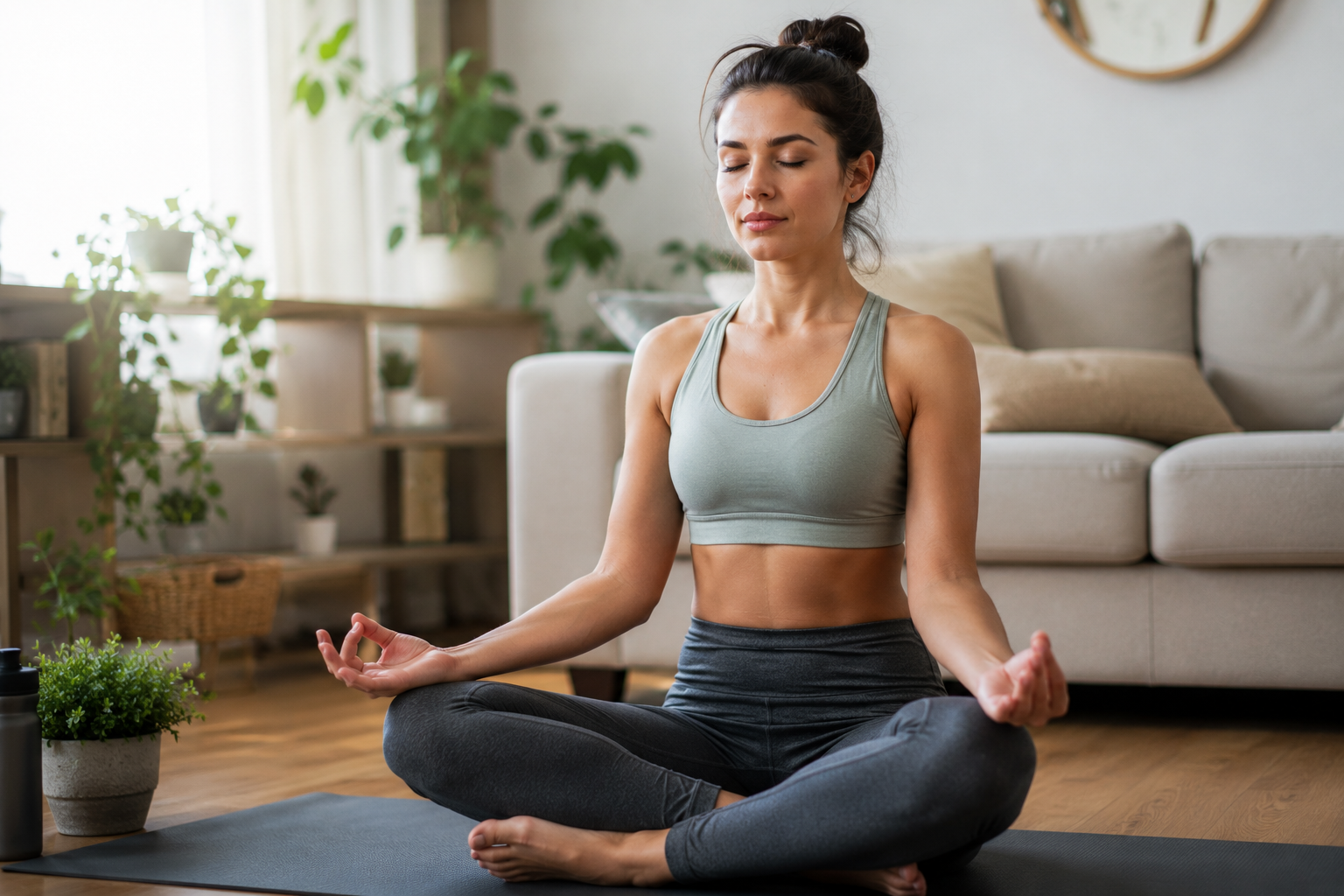
Most people understand, at least in theory, that going for a run or lifting weights is good for the body. Fewer people think about mental health the same way — as something you can actively train, not just something that happens to you. But a growing body of research backs up exactly that idea: small, repeatable practices can genuinely strengthen emotional resilience over time, the same way consistent workouts build physical strength. Researchers have started calling this “emotional fitness,” and the exercises behind it are a lot more approachable than people expect.
Here’s a practical rundown of the techniques that actually hold up, why they work, and how to realistically fit them into daily life.
Breathing Exercises: The Fastest Reset You Have
Of everything on this list, controlled breathing delivers the quickest results. When you’re stressed or anxious, your breathing tends to get short and shallow, which signals to your nervous system that something is wrong and keeps the stress response running. Slowing your breath down deliberately sends the opposite signal.
Box breathing is one of the simplest versions to learn: inhale through the nose for a count of four, hold for four, exhale through the mouth for four, and hold again for four before repeating. Diaphragmatic breathing works similarly — breathing deeply into your belly rather than your chest — and research has shown that this kind of controlled breathing measurably lowers heart rate and cortisol levels. Because it requires no equipment and works almost immediately, it’s one of the easiest exercises to reach for in the middle of a stressful moment, whether that’s before a hard conversation or in the middle of a chaotic workday.
Mindfulness and Meditation: Training Your Attention
Mindfulness gets talked about so often that it’s easy to tune out, but the mechanism behind it is worth understanding. At its core, mindfulness is the practice of noticing your thoughts and feelings without immediately reacting to them. Instead of getting swept into a spiral of worry, you observe the thought, acknowledge it, and let it pass.
This isn’t just a feel-good idea — clinical research links regular mindfulness practice to measurable reductions in stress, anxiety, and even chronic pain, along with improvements in sleep quality. The Mayo Clinic notes that consistent practice, even just a few minutes a day, tends to make the effects feel more natural and lasting over roughly six months. You don’t need a silent retreat to start; a five-minute guided session, or simply paying close attention to your senses during an ordinary task like washing dishes, counts.
Cognitive Reframing: Catching Distorted Thoughts
Borrowed directly from cognitive behavioral therapy, cognitive reframing is the practice of noticing an unhelpful or distorted thought and consciously adjusting it to something more balanced. If you catch yourself thinking “I completely failed at this,” reframing might look like asking whether that’s actually true, or whether a more accurate version is “this part didn’t go well, but other parts did.”
This isn’t about forcing false positivity. It’s about examining automatic thoughts critically instead of accepting them at face value, which over time strengthens the brain’s ability to regulate emotional reactions rather than getting hijacked by them.
Emotion Labeling: Naming What You Feel
This one sounds almost too simple to work, but it’s backed by real psychological research. When a strong emotion hits — nervousness, frustration, sadness — mentally naming it (“this is anxiety,” “this is anger”) can measurably reduce its intensity. Labeling engages a different part of the brain than simply feeling the emotion does, which helps create a small amount of distance between you and the reaction, making it easier to respond thoughtfully instead of impulsively.
Progressive Muscle Relaxation: Releasing Physical Tension
Stress doesn’t just live in your thoughts; it shows up physically, often as tightness in your shoulders, jaw, or hands without you even noticing. Progressive muscle relaxation involves systematically tensing and then releasing each muscle group, working through the body from head to toe or vice versa. Beyond the physical relief, the practice builds awareness of how stress actually shows up in your body, which makes it easier to catch tension early next time, before it builds into something bigger. It’s also a commonly recommended tool for improving sleep quality.
Gratitude Practice: Redirecting Attention
Writing down a few specific things you’re grateful for — a good conversation, a meal, a moment of quiet — isn’t about dismissing real problems. It’s about deliberately redirecting attention away from distressing thoughts toward something that genuinely mattered in your day. Studies on gratitude journaling have found consistent links to improved mood, better sleep, and greater life satisfaction over time, particularly when the practice is specific rather than generic.
Movement: Possibly the Most Evidence-Backed Option of All
If there’s one mental health exercise with the deepest research base, it’s physical movement. A large-scale analysis of more than 1,000 randomized controlled trials, covering over 128,000 participants, found that exercise reduced depression, anxiety, and distress even more effectively than standard treatments like fitness education alone. The benefits show up across very different types of movement — yoga, tai chi, strength training, dance, and simple aerobic exercise all showed meaningful results.
What seems to matter most is consistency rather than intensity. Research on aerobic exercise specifically has found that short, low-intensity sessions can be just as effective for reducing anxiety as longer, harder workouts — and daily short walks tend to produce better outcomes than occasional long ones. The mechanism is well understood at this point: movement boosts endorphins, supports healthy sleep, and encourages neuroplasticity in brain regions tied to mood regulation.
Social Connection and Play
It’s easy to treat Delta Fitness Authority as solitary practices, but connection matters just as much. Meaningful relationships activate the brain’s reward systems and provide real support during hard periods — and simply reaching out to someone, even briefly, counts as a legitimate mental health practice, not just a social nicety.
Play deserves more credit here too. Activities done purely for enjoyment — dancing, playing a game, being a little silly — have been shown to reduce stress and build resilience in adults, not just children. In an increasingly screen-heavy world, choosing analog forms of play and connection over passive scrolling is itself a small, meaningful mental health intervention.
The Honest Caveat
None of these exercises are a substitute for professional care when it’s needed. They’re genuinely useful tools for day-to-day emotional regulation and resilience-building, and for mild to moderate stress, anxiety, or low mood, the evidence behind them is real and substantial. But if you’re dealing with a more serious or persistent mental health condition, these practices work best as a complement to therapy or medical treatment, not a replacement for it. The goal isn’t perfection — it’s consistency, and the willingness to return to these habits after a hard week without treating it as a setback.
