

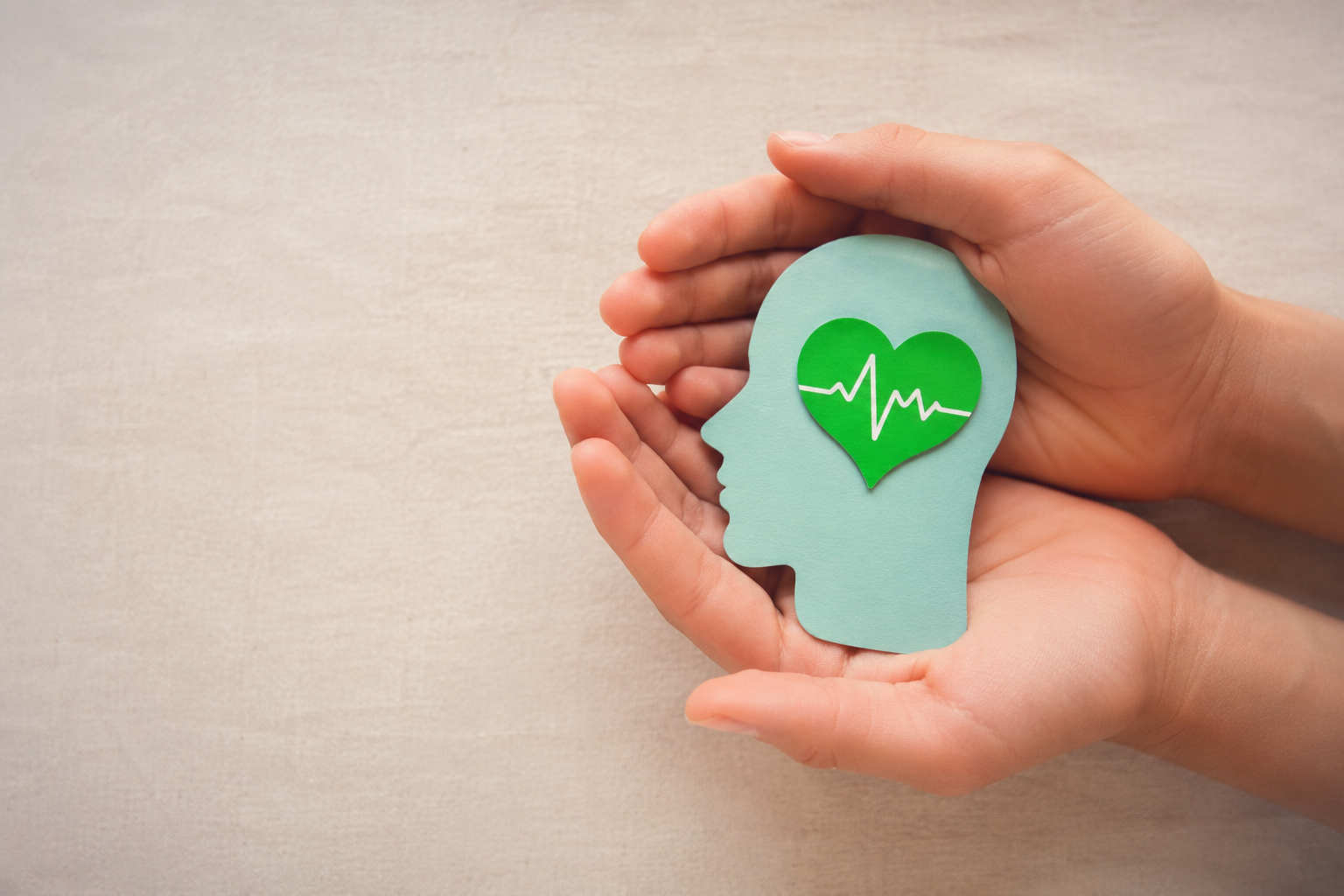
Some of the most powerful messages about mental health are never spoken out loud. They show up as a small green ribbon pinned to a jacket, a semicolon inked on a wrist, or a lotus flower stitched onto a hoodie. These images have become a kind of shorthand — a way to say “I understand,” “I support you,” or “I’m still here” without needing to explain anything further. Understanding where these symbols came from, and what they actually mean, helps explain why they’ve become such a lasting part of how people talk about mental health today.
The Green Ribbon: A Universal Signal
If there’s one image most people would recognize instantly, it’s the green ribbon. It functions as the global symbol of mental health awareness, worn during Mental Health Awareness Month each May and throughout the year by advocates, survivors, and supporters alike. The color itself was chosen deliberately — green is widely associated with renewal, balance, and growth, which fits naturally with the idea of recovery and hope.
What makes the green ribbon effective isn’t complexity; it’s recognizability. Seeing one pinned to a coat or printed on a pamphlet immediately signals a specific cause, the same way a pink ribbon instantly reads as breast cancer awareness. That instant recognition matters because it opens the door to conversation — someone curious about the ribbon has a natural, low-pressure way to ask about it, which is often exactly the opening a person needs to talk about something they might otherwise keep to themselves.
The Semicolon: Choosing to Continue the Sentence
Few mental health symbols carry as much personal weight as the semicolon. Its meaning comes directly from grammar: a writer uses a semicolon when a sentence could have ended, but the author chooses to continue it instead. Applied to a person’s life, the symbol represents a moment when someone considered ending their story — through suicide, self-harm, or overwhelming crisis — and chose to keep going.
The symbol traces back to Project Semicolon, a movement founded in 2013 by Amy Bleuel in memory of her father, who died by suicide. What started as a grassroots effort to encourage people to draw a semicolon on their wrist as a private, personal reminder has since grown into one of the most widely recognized tattoos in the world, adopted by people navigating depression, addiction, suicidal ideation, and other mental health struggles. Public figures embracing the symbol, including celebrities like Selena Gomez, have helped push it further into mainstream visibility, giving millions of people permission to talk more openly about their own experiences.
Nature-Inspired Symbols: Butterflies, Lotus Flowers, and Phoenixes
A recurring theme across mental health iconography is transformation drawn from the natural world. The butterfly represents this most directly — its journey from a grounded, restricted caterpillar to a free-flying, colorful adult mirrors the arc of recovery itself, a reminder that difficult, uncomfortable periods can eventually give way to something freer and more expansive.
The lotus flower carries a similar message but leans into contrast rather than transformation. Lotus flowers grow up through muddy, murky water before blooming into strikingly clean, vivid petals above the surface. As a mental health symbol, it speaks to the idea that beauty and growth can emerge specifically from difficult conditions, not despite them.
The phoenix, meanwhile, draws from mythology rather than biology. According to legend, the phoenix doesn’t simply survive hardship — it’s consumed by it, only to rise again, renewed, from its own ashes. For people who’ve been through a genuine mental health crisis and come out the other side changed, that image of complete destruction followed by rebirth often resonates more than a gentler metaphor would.
Symbols of Stability and Continuation
Not every mental health symbol is about dramatic transformation. Some represent something quieter: staying grounded. The anchor is one of the most common examples, symbolizing steadiness and the ability to stay tethered even when circumstances feel overwhelming. It’s a popular choice for people managing anxiety, where the goal isn’t necessarily rebirth but simply staying stable through difficult moments.
The infinity symbol serves a related but distinct purpose, representing the ongoing, non-linear nature of mental health recovery. Rather than suggesting a single before-and-after transformation, it acknowledges that healing is a continuous process without a fixed endpoint — an idea that resonates with many people who manage chronic mental health conditions over the course of years or a lifetime, rather than “recovering” once and being done.
More Specific and Newer Symbols
As mental health awareness has broadened, so has its visual vocabulary. The blue dot, for instance, has emerged specifically around maternal and perinatal mental health, drawing attention to postpartum depression and anxiety — conditions that have historically been underdiscussed and easy for both patients and healthcare providers to overlook. The black-and-white striped ribbon has become closely associated with bipolar disorder specifically, its two contrasting colors representing the manic and depressive poles of the condition. Other awareness ribbons use additional colors, like purple or teal, layered onto existing campaigns to represent suicide prevention or specific co-occurring struggles.
Why Symbols Matter More Than They Might Seem To
It would be easy to dismiss all of this as merchandise or empty gesture, but the psychology behind it is real. Visual symbols function as what researchers call environmental cues — small, ordinary signals that quietly tell the people around us which topics are safe to bring up. A green ribbon on a coworker’s bag or a semicolon tattoo on a stranger’s arm can be the difference between someone feeling isolated in their struggle and feeling like there’s already a supportive community waiting, without having to say a single word first.
They also help people find each other. A shared symbol, whether it’s a tattoo, a piece of jewelry, or a hashtag, creates a quiet form of recognition between people who understand something similar about each other’s experiences — something that can be genuinely stabilizing for someone who feels alone in what they’re going through.
A Note on Reading This Yourself
If you found this while thinking about what a symbol like the semicolon means for your own experience, that’s worth paying attention to. These symbols exist because so many people have needed them — and if you’re struggling right now, reaching out to a mental health professional, a trusted person in your life, or a crisis line can make a real difference. This is a sensitive topic, and if you’re personally affected, I’m happy to help you find the right resources.
